Not all modular builders work the same way, and the gap between a smooth commercial build and a stressful one usually comes down to what you ask before signing. For schools, businesses, and site managers across WA, understanding how different modular builders handle experience, compliance, pricing, and site logistics can mean the difference between a predictable project and a costly surprise. These ten questions cover what separates an experienced, compliant builder from one cutting corners.
1. What Experience Do You Have as a Commercial Modular Builder?
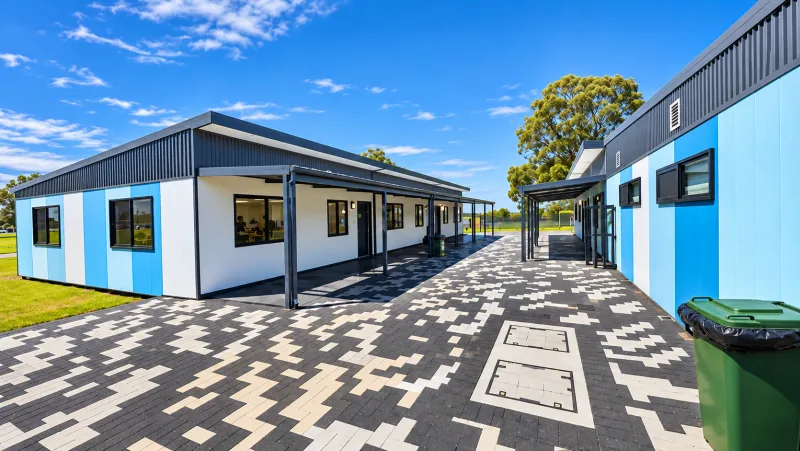
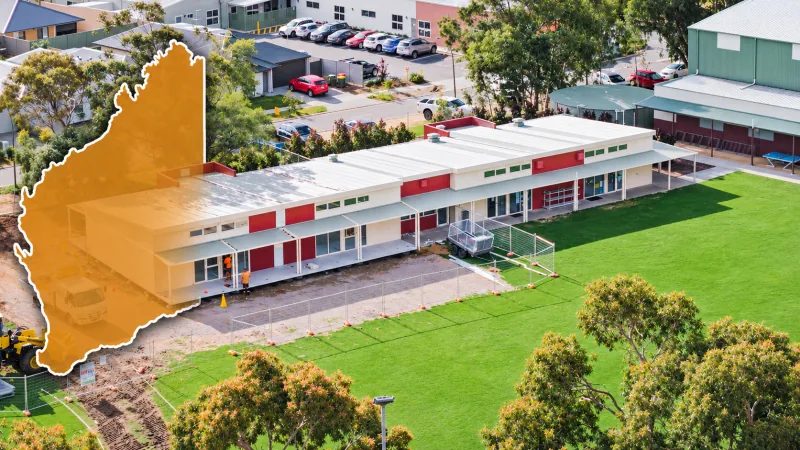
Ask to see completed projects that match your sector specifically, not just general construction experience. Most modular builders can point to a handful of jobs, so ask for ones in education, commercial, or site-office work specifically; that detail separates an experienced commercial modular builder from a generalist. Rapid Modular has delivered education projects including Silver Tree Steiner School, Byford John Calvin School, Landsdale Christian School and Helena River Steiner School, alongside commercial and site-office builds across WA.
2. Are You a Fully Licensed and Insured Modular Building Construction Company?
This is standard due diligence for any commercial build: ask to see the current builder's registration and insurance certificates before signing anything. In WA, building work valued at $20,000 or more (or $50,000+ for certain structures) that requires a building permit must be carried out by a registered building contractor, so registration isn't optional at commercial scale. Rapid Modular (WA) Pty Ltd holds an active ABN (98 670 875 939, registered since August 2023), which you can verify directly on the Australian Business Register.
3. How Do Your Modular Builders Handle Site Assessment and Preparation?
Every WA site is different, from Perth metro to the Pilbara, Kimberley, Goldfields, Wheatbelt, and South West, so ask how a builder accounts for local ground conditions, access, and climate before finalising a design. Reputable modular builders engineer for cyclonic loads and remote-site logistics as standard across WA, and transportable site buildings built for construction, mining and industrial locations need this kind of local engineering from the start.
4. What Is Included in Your Base Contract and Pricing Structure?
Ask for a clear breakdown of what's covered in the quoted price and what sits outside it; site works, compliance documentation, transport and installation are common areas where costs get missed. A transparent modular builder separates these out and tracks costs against the quote as the project progresses.
5. What Level of Customisation Do Your Modular Builders Offer?
Layouts should be able to flex around your team, campus or site, not the other way around. A good modular builder designs flexible commercial and executive buildings that can grow with a business over time, while education clients can choose single rooms, connected blocks, or full learning precincts depending on enrolments and site.
6. How Does Your Factory Construction Process Guarantee Quality and Compliance?
Every project should be engineered to the National Construction Code (BCA) and relevant Australian Standards from the design stage, not adjusted after the fact. A genuine commercial modular builder documents this properly, including planning, building permits, fire safety, accessibility and energy performance as standard, and educational projects should also meet AS1428.1, DET and AISWA requirements.
7. What Is the Estimated Timeline From Factory Build to Site Installation?
Manufacturing for standard layouts can typically be completed in weeks, with on-site installation completed in days once modules arrive, though actual lead times depend on scope, finishes and location. For education clients, installation is scheduled around bell times, exams and school events, with builds often completed during school holidays. For a closer look at how approvals and delivery windows actually play out in WA, see our guides on modular building approvals in WA and modular building construction in Perth.
8. How Are Modules Transported and Connected on Site?
Modules typically arrive on platform trailers and are positioned by crane or hydraulic jacking, then joined, sealed and commissioned on site. An experienced modular builder manages heavy haulage, pilot vehicles, permits and cranage across the relevant region to suit access and site constraints.
9. What Energy Efficiency and Sustainability Standards Do Your Buildings Meet?
Ask what's actually documented, not just claimed. Energy performance documentation should be part of standard NCC compliance, and educational buildings in particular should be specified with high-performance insulation, acoustic ceiling systems, quality windows and door seals, with heating and cooling systems sized for classroom use.
10. What Warranties and Post-Installation Support Do You Provide?
Ask for the specific warranty period, what it covers, and how defects or issues are reported and resolved after handover. Commercial construction contracts typically include a defects liability period of 6 to 24 months (12 months is most common), covering workmanship and materials, which sits separate from statutory warranties that can run up to 6 years for structural defects and 2 years for non-structural ones.
What Separates a Reliable Builder From the Rest
A modular building company that answers these questions clearly, backed by real projects and documented compliance, is one worth trusting with your next build. One that gets vague on experience, pricing or warranty terms is telling you something too, just as clearly. Ask before you sign, not after the module is already on site.
Ready to ask us these questions directly? Contact Rapid Modular for a transparent quote on your next project.
Frequently Asked Questions
How much does a commercial modular building typically cost?
Pricing depends on scope, finishes and location, but a transparent quote should separate the factory build from site works, compliance documentation, transport and installation, so nothing resurfaces later.
Do modular buildings need footings or a slab foundation?
Yes. Commercial and industrial buildings need engineered footings backed by a geotechnical investigation, typically designed to AS3600 rather than the prescriptive tables used for residential slabs under AS2870, and a compliant builder will confirm this as part of the design rather than after the module arrives.
What are the common misconceptions or drawbacks of modular
construction for commercial projects?
The main misconception is that modular means lower quality or limited design options. In practice, layouts can be reconfigured, expanded or tailored to a specific site, and every build is engineered to the same National Construction Code and Australian Standards as a traditional structure.
Can a modular building be relocated, expanded or resold
later?
Yes. Transportable buildings can be relocated, reconfigured, or expanded as site or business needs change, giving schools, businesses, and site operators more flexibility than a fixed structure.
What happens if my project scope changes after the contract
is signed?
A properly managed variation process documents any change in writing before work proceeds, the same principle behind standard commercial construction contracts such as AS4000, which requires variations to be directed in writing rather than agreed verbally on site.