Modular construction trends in WA are shaped less by hype than by pressure: too few skilled workers, shifting compliance expectations and projects that cannot afford to sit idle. For schools, businesses and site operators planning 2027 builds, understanding these modular construction trends now makes it easier to decide what to build, when to start and what to ask a builder. This outlook uses published research and says where a figure is a forecast or only applies at scale.
Modular Building Industry Trends Shaping WA Projects
Three modular building industry trends stand out for commercial and education projects heading into 2027.
Skills shortages are moving more work into the factory
Infrastructure Australia forecasts that the infrastructure workforce shortfall will peak at more than 300,000 workers in mid-2027, driven mainly by privately funded renewable energy projects, with regional shortages peaking at 181,000 in 2027 against a metro peak of 148,000 in 2026. That is not a modular figure, but it explains why modular construction trends keep returning to labour: factory production concentrates skilled work in one place.
Certification is becoming more consistent
The Australian Building Codes Board is developing a national voluntary certification scheme for manufacturers of prefabricated construction. A draft went to public consultation from 14 July to 15 September 2026, and the scheme is still in development with no launch date published. If adopted, it would give buyers a consistent way to compare factories. Until then, ask any builder how its buildings are documented against the National Construction Code.
Local manufacturing capacity is growing
The National Reconstruction Fund Corporation is providing $120 million in debt for a pilot facility at Neerabup producing modular precast components for mid-to-high-rise buildings, with the WA Government contributing land and a $20 million grant. Construction was due to start in the second half of 2026. The facility serves a different building type, though more local capacity may help WA supply chains generally.
Resources and Regional Projects Are Driving Demand for Site Buildings
Hubexo's Construction Outlook 2027 forecasts that energy and resources will make up about 36.8% of commencement value between Q3 2026 and Q2 2027, the largest share of any sector. Hubexo does not mention modular, so the link to site buildings is an inference: large resources projects need site offices and crib rooms early, and transportable site buildings are designed for that. For modular construction trends in site buildings, the same report found 78% of builders cite delays as their leading project challenge, up 10 points year on year, which supports ordering early.
Remote delivery adds its own planning. Heavy haulage, permits, cranage and lift studies all need to be sorted before a module leaves the factory, and cyclonic-rated options exist where wind loads require them.
Faster and Cheaper Depends on Scale
A CEDA and Urbis report released in May 2026, Built Different, estimates that modern methods of construction could shorten build times by 20 to 50 per cent and cut costs by roughly one-fifth, but only when applied at scale. The research looks mainly at residential buildings, so it is a signal for wider modular construction trends, not a promise for a single classroom or site office. CEDA itself calls it "not a silver bullet" and names fragmented regulation, inconsistent standards, financial constraints and workforce gaps as barriers. Infrastructure Australia puts prefabricated construction at less than 5% of the total market.
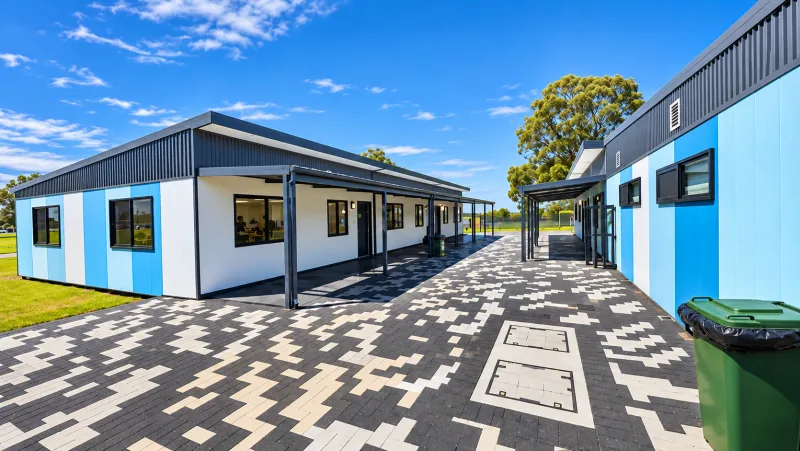
These modular building industry trends favour repeatable, staged scope. A project from Rapid Modular, Landsdale Christian School's Stage 2, a science laboratory and two classrooms, followed a Stage 1 completed months earlier. For how the two approaches compare, see modular vs traditional construction.
Quick comparison:
| Factor | Modular | Traditional |
|---|---|---|
| Where the work happens | Mostly in a factory, then installed on site | Mostly on site |
| Compliance | Engineered to the National Construction Code and Australian Standards | The same standards |
| Time and cost | Estimated 20 to 50 per cent faster and about one-fifth cheaper, at scale | The baseline |
| Changes later | Can be relocated, reconfigured or expanded | Fixed in place |
The Future of Modular Construction in WA
The future of modular construction in WA will probably be shaped by three of today's modular construction trends: more consistent certification, more local factory capacity and buyers who plan earlier. None is guaranteed: the scheme is still a draft and the efficiency estimates above depend on scale. For background on why organisations choose this approach, see why choose modular. In short:
- Quality control: a controlled factory process gives better control over quality, safety and speed.
- Short site time: manufacturing for standard layouts can take weeks, with installation typically completed in days.
- Less disruption: buildings can be delivered into live school environments with minimal disruption to staff and students.
Modular and transportable buildings can be relocated, reconfigured or expanded, which gives schools and businesses room to change as enrolments or headcount shift.
What These Modular Construction Trends Mean for Your Next Project
- Schools: Educational buildings are usually scheduled around bell times, exams and school events, with installation often completed in school holidays, so plan scope and stages early.
- Commercial: Commercial and executive buildings benefit from approvals and compliance being settled before design is fixed.
- Site offices: confirm transport, cranage and lift requirements before ordering.
If you are planning a 2027 build and want to talk through scope, approvals and lead times, Rapid Modular is happy to help.
Frequently Asked Questions
What are the latest modular construction trends in WA?
Labour pressure moving work into factories, a draft national certification scheme, growing local manufacturing and demand from resources and regional projects. Together they shape the future of modular construction in WA, although most depend on scale.
What is driving modular building adoption in Perth and
across WA?
Workforce shortages and delays are the main pressures. Hubexo found 78% of builders cite delays as their leading project challenge, and Infrastructure Australia forecasts workforce shortfalls peaking in 2027.
How do I find and choose a modular construction company in
WA?
Shortlist builders with completed projects in your sector, confirm current builder registration and insurance, and ask how buildings are documented against the National Construction Code.
Will new certification rules change how modular buildings
are approved in WA?
Currently, no. As the voluntary ABCB framework remains in development, contemporary structures are engineered in accordance with National Construction Code standards and accompanied by the necessary documentation for building permits.
When should a school or business start planning a 2027
modular project?
Early. Factory builds for standard layouts can take weeks and installation days, but design, approvals and site works come first.